
Few things are more frustrating than being halfway through a busy workday when your printer suddenly stops and flashes a message like “Service Required,” “Call Service,” or an error code such as E0, E1, or E3. One minute everything is working fine, and the next, your printer has decided it is taking an unscheduled break. If you’ve already tried turning it off and on again, clearing paper paths, or searching the error code online, you’re not alone. We see this scenario every week.
The important thing to understand is that these messages are usually symptoms of an underlying issue, not the actual problem itself. Think of them as your printer’s version of a check engine light. The code tells you something is wrong, but it doesn’t necessarily tell you why.
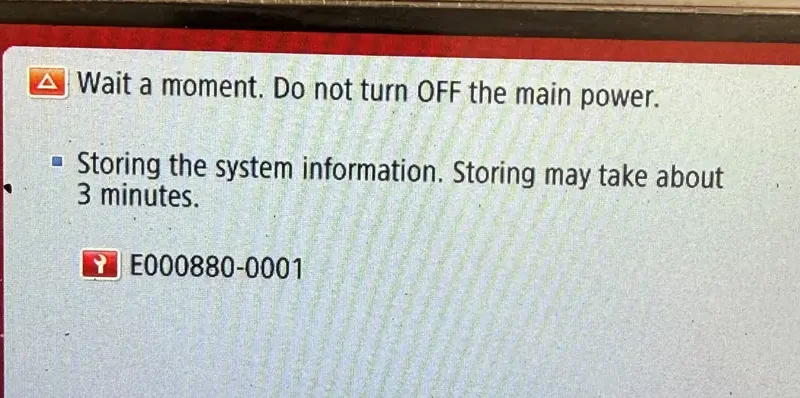
The Error Code Is the Messenger
After more than 20 years servicing printers in offices, warehouses, schools, medical clinics and industrial environments, we’ve learned that the displayed error is often only a small piece of the story. An E1 error might appear to be a paper feed issue, but the real culprit could be a worn roller, a damaged sensor, or even a faulty motor. An E3 code may point towards a jam or mechanical fault, but we’ve also seen it triggered by components that were slowly failing over time.
Many customers call us after spending hours trying every online fix they can find. Sometimes the printer will even start working again temporarily, which creates the impression that the problem has been solved. Then a few days later, the same error returns, usually at the worst possible moment when invoices need printing or an important deadline is approaching.
Why "Service Required" Shouldn't Be Ignored
When a printer displays a “Service Required” message, it is essentially telling you that something has moved beyond normal operation. Modern printers are packed with sensors, motors, circuit boards and monitoring systems that constantly check whether the machine is functioning correctly. When one of these components detects a fault, the printer may stop operating to protect itself from further damage.
We’ve attended service calls where businesses continued restarting a printer for weeks because it would occasionally come back online. By the time the printer finally stopped altogether, a relatively small repair had turned into a larger and more expensive job. Catching the issue early often saves both money and downtime.
Our Experience with E0, E1 and E3 Errors
One of the most common misconceptions is that error codes have a universal meaning across all printer brands. In reality, an E0 error on one machine may mean something completely different on another. The same applies to E1 and E3 messages. That’s why generic online advice can sometimes send users down the wrong path.
Over the years, we’ve diagnosed these codes as everything from dirty sensors and damaged cables through to worn fusers, failing power supplies, firmware issues and mechanical component failures. The displayed code simply points us in the direction of the fault. The real skill lies in identifying what’s causing the warning in the first place.
This is why experienced technicians don’t just clear the code and send the printer back into service. We investigate what triggered it, test the affected components and ensure the underlying issue has been resolved.
Common Signs Something Bigger Is Happening
Error codes rarely appear in isolation. In many cases, businesses notice other symptoms before the warning message appears. The printer may become slower than usual, produce unusual noises, struggle to feed paper consistently, stop mid-job, or require frequent restarts. Sometimes the print quality begins to deteriorate around the same time.
These seemingly unrelated issues often connect back to the same root cause. The printer is essentially providing clues that something inside the machine needs attention.
When It's Time to Call a Printer Technician
If your printer is displaying “Service Required,” “Call Service,” E0, E1, E3 or any recurring fault message, the best approach is to treat it as an early warning rather than an inconvenience. The sooner the issue is properly diagnosed, the better the chance of avoiding extended downtime and more significant repairs.
At Laserfast, we’ve spent decades helping businesses get to the bottom of printer faults that don’t always have obvious answers. Whether the issue involves a sensor, motor, paper path, maintenance kit, fuser or electronic component, our goal is to identify the real cause of the problem and get your printer back to doing what it was designed to do—working reliably when you need it most.
Because at the end of the day, the error code isn’t the problem. It’s simply your printer asking for help.